There is no frigate like a book
To take us lands away
Emily Dickinson

Wednesday, April 13, 2011

                              A Broken Vessel
                                                    by KateRoss

No detection team was ever more mismatched: Julian Kestrel, the debonair and elegant regency dandy, and Sally Stokes, a bold and bewitching Cockney prostitute and thief. But one night fate throws them together, giving them the only clue that can unmask a diabolical killer.
It all starts in London's notorious Haymarket District, where Sally picks up three men one after the other and nicknames them Bristles, Blue Eyes, and Blinkers. From each of them Sally steals a handkerchief -- and from one she mistakenly steals a letter that contains an urgent appeal for help as well. But which man did she get the letter from? Who is the distraught young woman who wrote it? And where is she being held against her will? These questions take on a new urgency when Sally finds the writer of the letter -- dead.
Luckily, Sally's brother is none other than Dipper, reformed pickpocket and now valet to gifted amateur sleuth Julian Kestrel. The authorities dismiss the girl's death as suicide, but to Kestrel it looks more like murder. To prove it, he must track down Bristles, Blue Eyes, and Blinkers, and find out which of them had the dead girl's letter. Sally uses all her ingenuity and daring to help Kestrel solve his case. 

A Broken Vessel was the 1994 winner of the Historicon's Gargoyle Award for Best Historical Mystery.

Kate is very clear on why she was intrigued by the Regency Period. "The 1820's in England marks a fascinating transition between the swashbuckling 1700s and the workaday Victorian world. In addition, the dandy of the period -- elegant, observant, witty, detail-oriented, and cool under fire -- makes a terrific sleuth. Finally, 1820s England is a good hunting ground for an amateur detective because of the lack of a professional police. I do, however, hope to take the series to the founding of Scotland Yard's Metropolitan Police in 1829."


Katherine (Kate) Ross was the author of the successful Julian Kestrel mystery series, a graduate of Wellesley College and theYale law school, and was a trial lawyer for the Boston law firm of Sullivan & Worcester.
After a long battle with cancer, Kate passed away on March 12, 1998. 

There are four novels: Cut To The QuickA Broken VesselWhom The Gods Love and The Devil In Music. A fifth was in the works at the time of her passing.

Julian Kestrel

The Birth of Roderick Alleyn


Ngaio Marsh

He was born with the rank of Detective Inspector CID on a very wet Saturday afternoon in a basement flat off Sloane Square in London. The year was 1931.

Ngaio Marsh had been reading a mystery novel either a Christie or a Sayers. It was the time in London when the Murder Game was popular and Marsh began to think of a character that would be a solver of crimes. At that time there were many detectives identifiable by their mannerisms. There was Hercule Poirot with his moustaches and grey cells, Peter Wimsey, excruciatingly facetious, Reggie Fortune a character of H.C. Baileys who repeated “My dear chap, Oh, my dear chap”, and Philo Vance who spoke in a strange language attributed to Balliol College, Oxford.

March hoped to avoid mannerisms and wanted him to be a civilized, attractive man with whom it would be pleasant to talk but much less pleasant to fall out. That is a nice chap with more edge to him than met the eye. She also tried to avoid the issue of age. Hercule Poirot by ordinary reckoning was 122 when he died.

His name was not too difficult. Her father was an old boy of Dulwich College, an English public school. Old boys were called old Alleynians. Now for a resounding first name, something Scottish -Roderick.


Roderick Alleyn, Detective Inspector CID yes!

Tuesday, April 12, 2011

The Nursing Home Murder

 The Nursing Home Murder   by Ngaio Marsh

Ngaio Marsh's third mystery takes place in a peculiarly English setting, a private nursing home.The Home Secretary Sir Derek O'Callaghan who has been suffering from a previously unknown illness has been diagnosed with a ruptured appendix and peritonitis. Considered to be a friend of his, Sir John Phillips has been called upon to do the operation at this private nursing home.

The Home Secretary has been instrumental is writing and passing an important bill in Parliament and has been receiving threatening letters from members of the local communist party. He has also received death threats from a former mistress as well as the eminent surgeon as well.

Present during the operation are the authors of two of the letters and at least two more people who wish him ill. Close to him before the operation were the wife he had been cheating on and a hypochodriacal sister who has been pushing multiple patent  medicine concoctions on him ever since Sir Derek began complaining of problems. These nostrums were made for her by a friendly pharmacist who was also a member of the communist party.

Detective Chief Inspector Alleyn has been called into the case and it has been found that Sir Derek was poisoned by an overdose of Hyoscine. As the story evolves there are a surfeit of suspects. But sharp eyed Roderick Alleyn has his ducks in a row before too long.

This is a vintage mystery published around 1935. The medicine is archaic. They no longer use or inject camphor as a stimulant after surgery. Hyoscine, better known as scopalamine and used as a transdermal patch for motion sickness was used to decrease gastric or other secretions during surgery. There don't seem to be IV lines of any sort, these were not commonly used until the 1950's mostly because they did not have safe IV fluids. They were a source of infection. There were no post op ICUs. Blood tests are not ordered nor was there things like EKGs which were used in the US during the 1920's. The feeling was that the clinical exam was more trustworthy.American medicine was more scientifically curious and Xrays were used first here at UPenn in 1925. Xrays are mentioned in other European works such as THE MAGIC MOUNTAIN by Thomas Mann written before this novel.

Sir Derek was expected to survive this operation none the less. This he did but he died a few hours later. They don't mention CPR.

Monday, April 11, 2011

                        The Pot Thief 
     Who Studied Pythagoras
                                      By J. Michael Orenduff
 
Herbert Schuze is an archeologist who specializes in ceramic pots of the indigenous cultures of the Southwest. He has his own code of conduct with regard to the ownership of buried ceramics. He believes that is they pieces are on public lands, as part of the public he is as entitled to them as anyone. He knows that the actual owners and their progeny are long gone.
 
Hubert is minding his own business tending his shop where he occasionally sells the pots he has acquired, when a shady character offers him a great deal of money to steal a thousand year old pot from a local museum. This is not the kind of chicanery Hubert wants to get involved with but before much time has passed he is accused not only of thievery but also of murder.


Before he was an archeologist Hubert studies mathematics, and recently he picked up a book on Pythagoras and is reacquainting himself with that great scholar. Every one is taught the Pythagorean theorem which states that the sum of the squares of the two short sides of a right triangle is equal to the square of the long side. This is also a case for seeing things from a different perspective and checking out all the angles.

Sunday, April 10, 2011


       INÉS
OF MY SOUL  

                    by Isabel Allende


This is the history of Inés Suarez a poor seamstress in Spain whose husband went to the Americas to seek his fortune after hearing about the wondrous possibilities being opened up by Francisco Pizarro in Peru. After he disappears, she gets royal permission to search for him and sails to the New World to discover he had been killed in a military skirmish fighting with Pizarro’s brother.

She settles in Cuzco and ekes out a living as a seamstress and cooking wondrous empanadas.  It is here that she falls passionately in love with the conquistador Pedro de Valdivia who has been a great ally of Pizarro’s. His dream is to conquer Chile, an area with fierce indigenous tribes who have held off others who have attempted to colonize them. Diego de Almagro had led an expedition as far south as the River Bio Bio crossing the fierce Andes and the driest desert in the world only to crumble under the forces of the Mapuche warriors and had to return to Peru his forces decimated and demoralized.
 
Chile was given it’s name by Diego de Almagro since this is what is was called by the Incas from the Mapuche word for “where the land ends.

Pedro de Valdivia wants glory, but more than that he foresees a land where there can be honor, tolerance, justice and a place where native and Spaniard can co exist amicably if treated appropriately. With Ines and her sword at his side, Valdivia leads his conquistadors south from Peru, carving out a new country in the process. They founded the now capital Santiago, the cities Valdivia as well as Conception.

Valdivia and Inés succeed in much of what they start out to do but ideas of egalitarianism and glory don’t always successfully coexist and great ideals fall by the wayside. Valdivia was married and he was forced to give up Inés as well. Inés was then married to Rodrigo Quiroga who was a second of Valdivia’s as well as a great friend of Inés’ and the two end up with different destinies.

The story is told by Inés as a very old woman at the end of her life to a younger woman Isabel who is like a daughter to her. The struggle of the establishment of the Spaniards in Chile is epic, violent and prolonged. It is a story well worth telling.

Saturday, April 9, 2011

City of Bones


City Of Bones  

By Cassandra Clare


Clary Fray is a fifteen-year-old girl comfortable in her life and with her friends who goes out to an all age nightclub called Pandemonium. A very interesting young man catches her eye and she sees that he might be in trouble. She follows to see if she can help and she observes a fight to the death and wants to call for help when she realizes that others cannot see what she has seen.

Thus begins a new phase of Clary’s life. Even as she is on her way home she receives a frantic call from her mother not to return home but to go to a friend’s house instead but it is too late because the things Clary have seen have thrust her into a new world and she cannot turn back. Now Clary needs answers, which she can’t get at home because her mother has disappeared.
 
The new world now open to Clary’s vision is one of another dimension in which forces of good, the Shadowhunters try to maintain a balance between the downworlders such as vampires, werewolves and faeries and even worse, the demons.
This is the first of a series and is an intriguing take on old villains, and is quite entertaining.


Friday, April 8, 2011

Books of Interest being read by those I encountered this week April 4

Big Wheat: A Tale of Bindlestiffs and Blood by Richard Thompson  is an intriguing mystery that takes place in the era after WWI and the background is North Dakota and the time of  threshing wheat, as machines were gradually replacing manual labor.

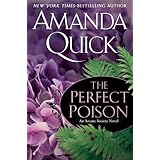
Perfect Poison  by Amanda Quick

        A historical mystery taking place in Victorian London, where Lucinda Bromley a spinster botanist and psychic meets her match in Caleb Jones, a member of the Arcane Society and descendant of an alchemist family that makes him the stuff of myth and legend. Together, this paranormal pair of snoops sets out to track down a thief who made off with a dangerous plant implicated in a murder.


  This looks interesting!


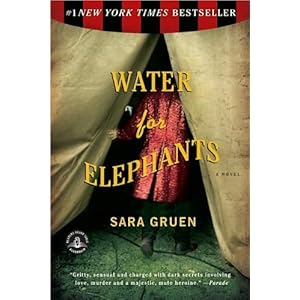
Water for Elephants  by Sara Gruen


Middlesex  by Jeffrey Eugenides


I enjoyed another book of his The Virgin Suicides.


Hedda Gabler by Henrik Ibsen

Thursday, April 7, 2011

The lighthouse

The Lighthouse           by P. D. James

There is a small island off the Cornwall coast that has belonged to a family for centuries. They have created a fund by which the island has become a retreat for a select group of people who have high profile stressful jobs. The government is planning a type of summit meeting at the location when there is a suspicious death.

Adam Dalgliesh and his team are called in so that the can be a discrete investigation. A man has been found hanging from the railing of an old restored lighthouse. Murder or suicide is the mystery.

Here we have a type of closed community set of suspects many of who have good motives. The dead man was a miserable fellow, egotistical, selfish, and cruel.

Dalgliesh has others problems on his mind of a personal nature, as does Kate Miskin his second in command. The is one story where the third member of the team, Benton-Smith also gets a little more page time and he is a very good addition to the investigation.

As is often the case one death leads to another and climatic as well as other factors contrive to keep Dalgliesh from doing his job. His team does not let him down.


This book was dedicated to James’ husband. He was a doctor in WWII that was disabled and James took care of him for a long time.

Tuesday, April 5, 2011

Siren of the Waters


Siren of the Waters        by Michael Genelin


  In the first book in Michael Genelin’s new series begins as Jana Matinova examines the site of a car crash that killed seven people.  Most of them are prostitutes from Eastern Europe

Jana Matinova entered the Czechoslovak police force as a young woman, married an actor who eventually became an enemy of the state. The regime destroyed her husband, their love for one another, and her daughter's respect for her. At a great sacrifice to herself and others she managed to get her daughter to The United States but her daughter has never forgiven her for separating her from her father.

Despite her personal problems she has never stopped being a seeker of justice. Now, as a commander in the Slovak police force, she has a very good reputation and is sent to liaise with colleagues across Europe as they track the mastermind of an international criminal operation involved in, among other crimes, human trafficking.

Her investigation takes her from Ukraine to Strasbourg, from Vienna to Nice, in a hunt for a ruthless killer and the beautiful young Russian woman he is determined either to capture or destroy.

The plot is complex but easy to follow. The personalities are very well drawn, as are the localities. Michael Ganelin shows that he knows Europe well.  While Slovakia calls itself capitalist, the country hasn’t fully shed its communist tendencies as is seen in the careful way Matinova treads while doing her work.

There are two main forces in the criminal world and one sees that protecting Matinove may be helpful so she has unknown protectors. This is good because she also has unknown enemies.

This story was compelling up to the final page. Fortunately  Genelin has two other books in this series.

Sunday, April 3, 2011


The Last Cut By Michael Pearce


In early twentieth century Cairo life was changing at a rapid pace. As is always the case with progress some of the changes were for the better but in some eyes many changes were also for the worse. The problem was that nobody could agree about which changes were good and which were harmful. The point in question had to do with a change in the manner in which water was delivered to the city.  For thousands of years Egypt has depended on the waters of the Nile. At the time of this story control of Egyptian water was done by the use of mighty dams such as the Aswan and smaller local ones and also by introducing underground piping which would take the water to specific sites. It was the custom in Cairo to open the gates and let water flow into the country, as the water level of the Nile grew dangerously high. This was known as The Cut and it was a time of celebration and acknowledgment of ancient beliefs.

The government of Cairo in these days was a mixture. The British controlled the police and the finances; the Parquet, which was the legislative branch, was controlled by Egyptians who based their laws on the Napoleonic Code that were introduced by the French when they controlled the area. The local Khedive was the royalty of the time and it was concerned about the morality and happiness of the people. The city was composed of Muslims, Christians related to the Greek orthodox beliefs called Copts, and there was also a large Jewish community.

Progress at this point was the elimination of The Cut and the filling in of some of the canals for road and railways. The government was in favor of this because it would mean greater prosperity for the city. The health authorities were also approving of the changes because it would reduce disease caused by polluted drinking water, which was taken directly from the river.

It was the common people who were against it because it would change their way of life by taking away an important ceremony and in fact was a good example of British interference. Some felt returning to the old ways before the erection of dams was what was needed. With the dams there could be but one crop a year. Now three crops a year were possible. The cost of this was that due to almost continual flooding 85% of men had Bilharzia and conjunctivitis and were thus in ill health and weak.

What would bring everything to a boiling point was the discovery of a dead woman at the site where the cut was to take place as well as an act of sabotage to the dam itself. Initially it was thought that the woman died from complications of a ritual circumcision, but she was found to have been strangled. Could she have been a virgin sacrifice as told in the myths or was this part of a greater evil? Gareth Owen the Mamur Zapt, head of the political police must find the answer while balancing all separate points of view before worse troubles came to the city.

Michael Pearce's series about the Mamur Zapt and the British presence in Egypt is beautifully done. He disassembles ancient history and recreates it with color, wit, intelligence and love of his subject and Egypt. He carefully navigates the subjects of religious intolerances, cultural practices such as ritual circumcision and imperial colonialism without offending the reader or ignoring the facts of the times.